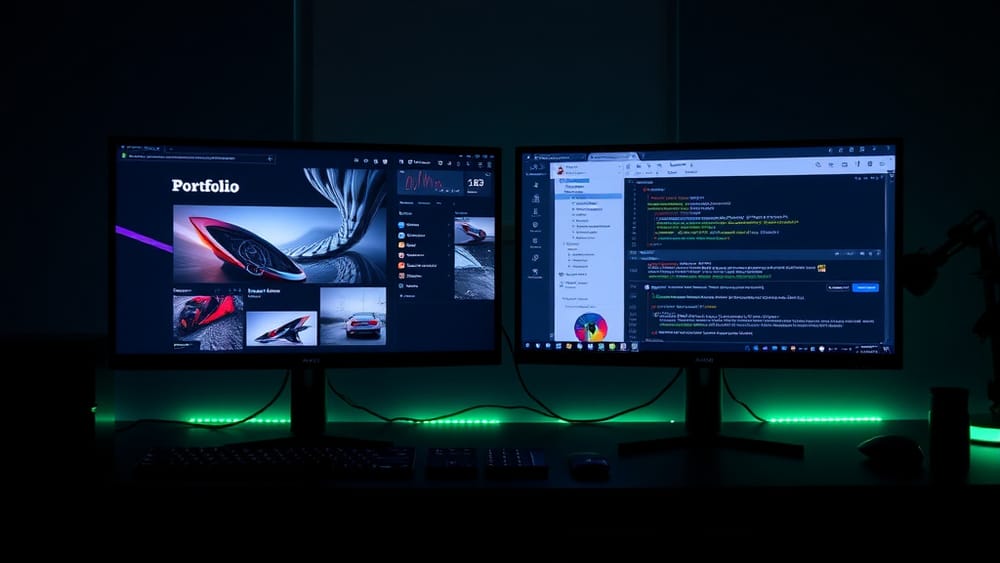
Your portfolio was impressive the day you published it. Three weeks later, it was a lie.
Not intentionally. But the moment you shipped that next project, merged that tricky PR, or wrapped up a freelance contract, your portfolio fell behind. And it's been falling behind ever since.
This is the core problem with static portfolios in 2026: they're snapshots of a past version of you, not evidence of what you're capable of right now.
The Staleness Problem Is Worse Than You Think
Most developers and designers update their portfolio once or twice a year, usually when they're actively job hunting. The rest of the time, it sits there, quietly misrepresenting them.
Consider what changes in a typical six months:
- You've closed five to ten GitHub repos with real, shippable work
- You've picked up new tools, frameworks, or design systems
- You've solved harder problems than anything currently on display
- Client projects have wrapped up that demonstrate real-world impact
A recruiter or potential client landing on your portfolio today is seeing the developer or designer you were last year. That gap matters more than most people admit.
What a Living Portfolio Actually Means
The phrase gets thrown around loosely, so let's be specific. A living portfolio is one where the content updates automatically based on what you're actually doing, without you logging in to write about it.
In practice, that looks like:
GitHub integration. Your recent public repos, commit activity, and starred projects surface automatically. Someone can see you pushed code last Tuesday, not just that you once built a to-do app in React.
Project feeds. When you finish a project, the metadata, stack, screenshots, and outcomes sync without manual data entry.
Timeline activity. Instead of a static list of past roles, your portfolio shows a rolling timeline of what you've shipped, contributed to, or published.
The result is a portfolio that reads like an active presence, not an archived CV.
Why This Matters More for Freelancers Than Anyone
If you're freelancing, your portfolio is your entire sales funnel. A stale one doesn't just cost you credibility, it costs you contracts.
Clients hiring freelancers are not making a long-term bet on potential. They want evidence of recent, relevant output. A portfolio that shows a project from 2023 as your most recent work signals one of two things: you haven't been busy, or you haven't bothered to maintain your own professional presence. Neither is a good look.
A self-updating portfolio solves this without adding a maintenance task to your already packed schedule. It works in the background while you focus on the actual work.
The Technical Shift That Makes This Possible
Three years ago, building a self-updating portfolio required custom API integrations, webhook setups, and either a backend you maintained yourself or a Jamstack pipeline you had to babysit.
That's no longer the case. Tools built specifically for this problem now handle the plumbing. CV2Folio, built by Novion, is designed around exactly this idea: your portfolio should be generated from your existing professional data and stay current without manual work. You connect your CV, your GitHub, your project history, and the system builds a portfolio that reflects who you are today, not who you were when you last had time to update a website.
The underlying principle is simple. Your work already exists. The problem has always been the friction between doing the work and documenting the work. Removing that friction is the actual product.
What to Look for When Choosing Your Approach
Whether you build it yourself or use a platform, a living portfolio needs a few specific things to actually work:
Automatic source connections. GitHub at minimum. Ideally also Dribbble, Behance, Notion, or wherever your work actually lives.
No-friction updates. If updating your portfolio requires you to log into a CMS, write copy, and hit publish, you won't do it consistently. The system should pull from sources you're already updating.
Proof of recency. Timestamps, commit counts, active project indicators. Visitors should be able to see at a glance that you're currently shipping, not coasting.
Professional presentation without manual design work. The content should flow into a clean, credible layout automatically. You're a developer or designer, not a content manager.
Stop Maintaining a Museum
A static portfolio is a museum exhibit. It shows what you made, behind glass, frozen in time. A living portfolio is a working studio. It shows what you're making, what you're thinking about, and what you're shipping right now.
The best time to make this shift was when you first built your portfolio. The second best time is this week, before another month of work goes undocumented.
Build your living portfolio at cv2folio.novion.one.