Your portfolio is the first thing a client or hiring manager judges you on. If it looks like it hasn't changed since 2023, that judgment happens fast.
The shift from static portfolio sites to living, auto-updating ones is not a trend. It is a practical response to how hiring actually works in 2026. Recruiters and clients scan dozens of portfolios. A site that reflects what you shipped last month signals something a static site cannot: that you are active, current, and serious.
What a 'Living Portfolio' Actually Means
A living portfolio is not just a website you update more often. It is a portfolio that updates itself, pulling fresh work directly from the tools you already use.
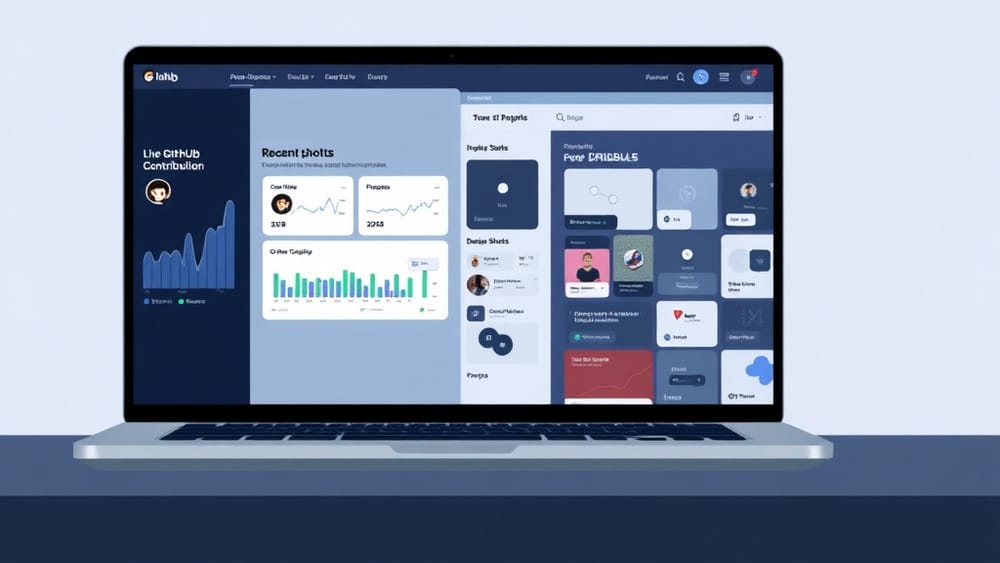
Think GitHub activity, Dribbble shots, Behance projects, or client case studies added through a CMS. When you push a new repo or publish a new design, your portfolio reflects it automatically. No manual uploads. No copy-pasting screenshots. No remembering to update your 'recent work' section six months after the fact.
This matters because the portfolio you maintain manually is always behind. The one connected to your workflow is always current.
Why Static Sites Feel Abandoned (Even When They Are Not)
A static portfolio site built in 2023 and left mostly unchanged sends an unintentional message. Visitors cannot tell whether you stopped working or just stopped updating your site. To them, the result looks the same.
Here is what a stale static site signals:
- The last project listed is from 18 months ago
- The tech stack on your 'skills' page no longer reflects what you actually use
- Blog posts or case studies have not been added in over a year
- GitHub contribution graphs embedded on the site are static screenshots, not live data
Even talented developers and designers lose opportunities this way. A portfolio that does not move does not look like it belongs to someone who does.
The Integrations That Do the Heavy Lifting
The practical advantage of a living portfolio comes from connecting it to the places where your real work lives.
GitHub: Live contribution graphs, pinned repos with current descriptions, and auto-populated project cards show technical activity without you lifting a finger after setup.
Dribbble and Behance: New shots and projects appear on your portfolio the moment you publish them. Your design portfolio is always your most recent work, not your most memorable manual upload.
Client work via CMS: For freelancers, a headless CMS or integrated form lets you add a new case study in minutes, not hours. Structure it once, reuse it forever.
Resume and CV data: Tools like CV2Folio, built by Novion, go further by generating your portfolio directly from your CV or resume and keeping your experience section structured and updatable from a single source of truth. You update your CV, your portfolio reflects it.
The Maintenance Argument Is a Trap
A common objection to living portfolios is that setting up integrations takes time. This is true once. After that, the static site owner spends more cumulative time on manual updates than the person who spent a weekend connecting their tools.
Do the math:
- Manual static update: 30 to 90 minutes per project, done inconsistently
- Living portfolio: 0 to 5 minutes per project after initial setup
For a freelancer shipping four to six projects a year, that is several hours saved. For a developer making regular open-source contributions, it is the difference between a portfolio that looks alive and one that looks archived.
The real maintenance burden is not the setup. It is the guilt of knowing your static site is out of date and not getting around to fixing it.
What Hiring Managers and Clients Actually Notice
Recent is credible. That is the blunt reality.
When a hiring manager looks at two candidates with similar skills, the one whose portfolio shows a project from last month edges out the one whose most recent work is dated eight months ago. The activity itself is a signal: this person is building things, learning tools, and staying in the game.
For freelancers, clients are even more sensitive to this. A portfolio with stale work raises the obvious question: are they available, or have they moved on? A living portfolio answers that question before it is asked.
The mechanics of how your portfolio updates are invisible to visitors. What they see is whether the work is current. Automation is just how you make sure it always is.
A portfolio is not a document you file once. It is the public face of a career that is still happening. Keeping it current manually is a losing battle for most working professionals. Connecting it to where your work already lives is not a luxury feature; it is the baseline expectation in 2026.
Build your living portfolio at cv2folio.novion.one.